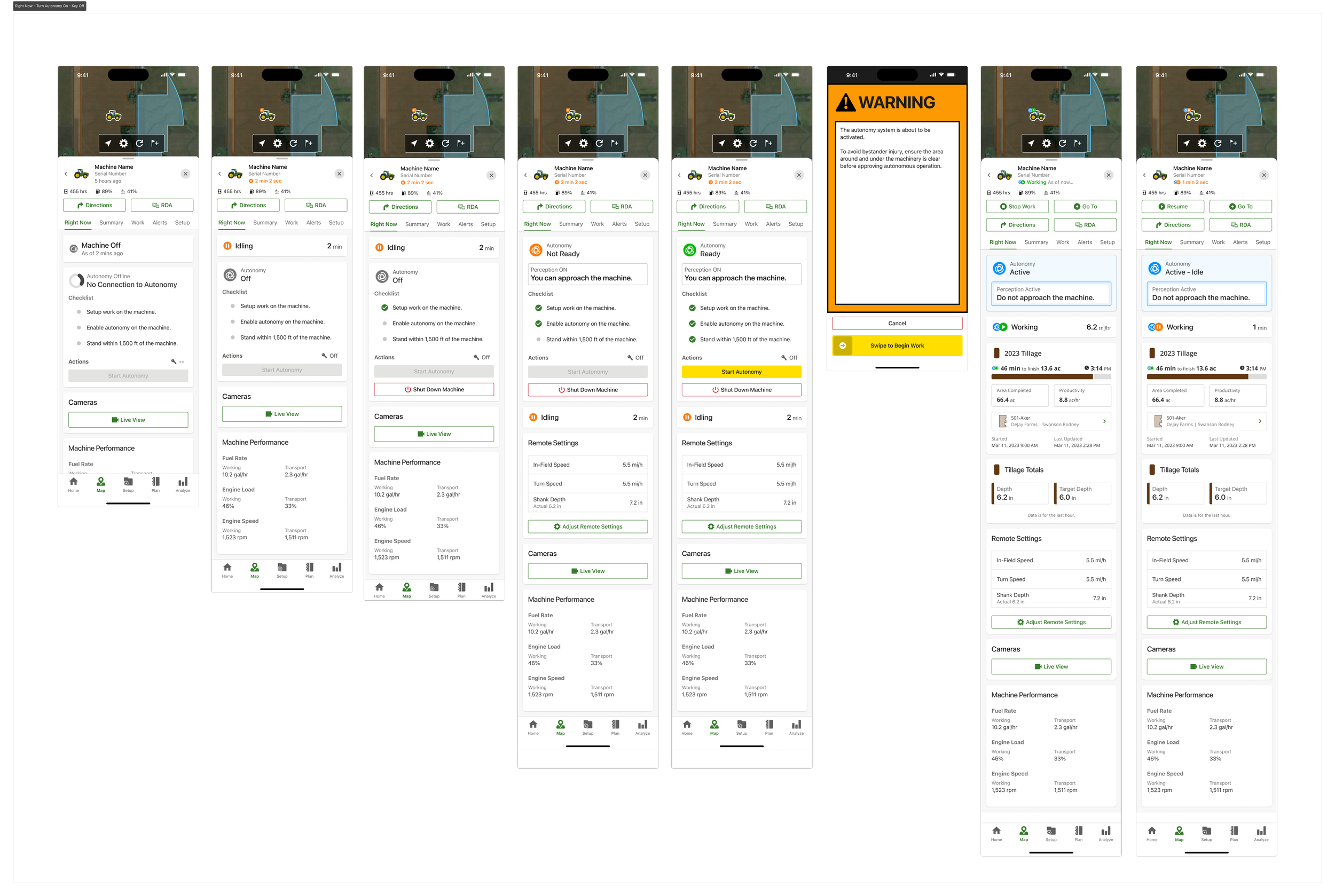
Operations Center Mobile
PATH PLANNING
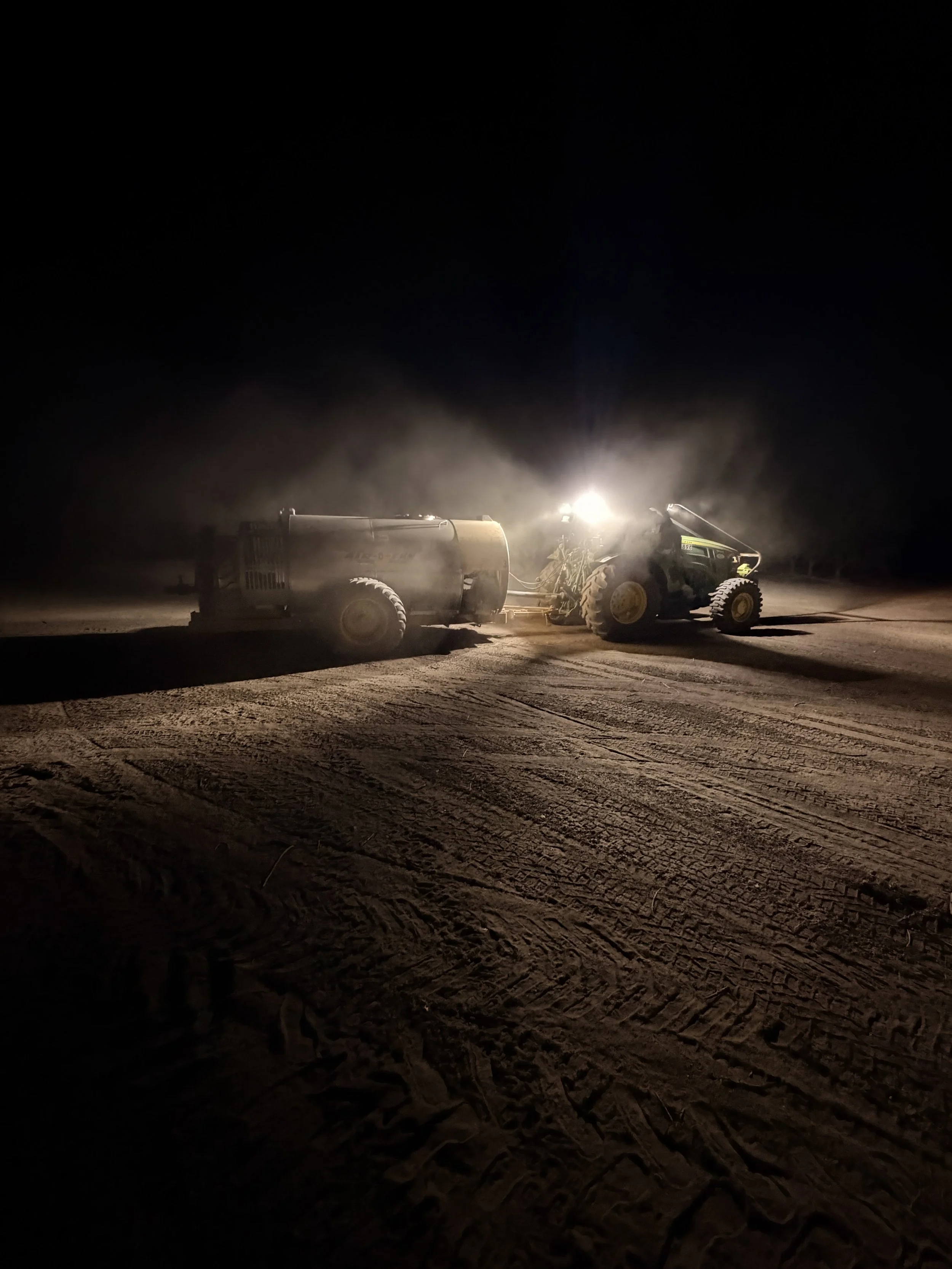
Autonomous Tillage & Blast Spraying
My Role: UX Designer
User Research, Design Strategy, Prototyping, Wireframing, Mobile Design
Creative Partners:
UX Product Leads Erich Wassilak and Rachel Stuck UX Design led by Kayla Schulte
Approach
As sole UX producer, I own the execution of the mobile design for this first-of-its-kind autonomous experience, partnering closely with product, engineering, and key stakeholders to keep the needle moving forward.
I thrive on ambiguity, taking on technically complex, undefined problems and working through the mess to find scoped, actionable direction. Getting there means staying close to engineering, product, and cross-functional partners every step of the way — not just at handoff.
The complexity then shows up in the details, like taking an early Jupiter concept and pushing it into a patent-worthy solution. We’ve done the same with the multi-machine guidance planning, making sure to balance active monitoring needs with surfacing what decisions the machine was and is making.
Context
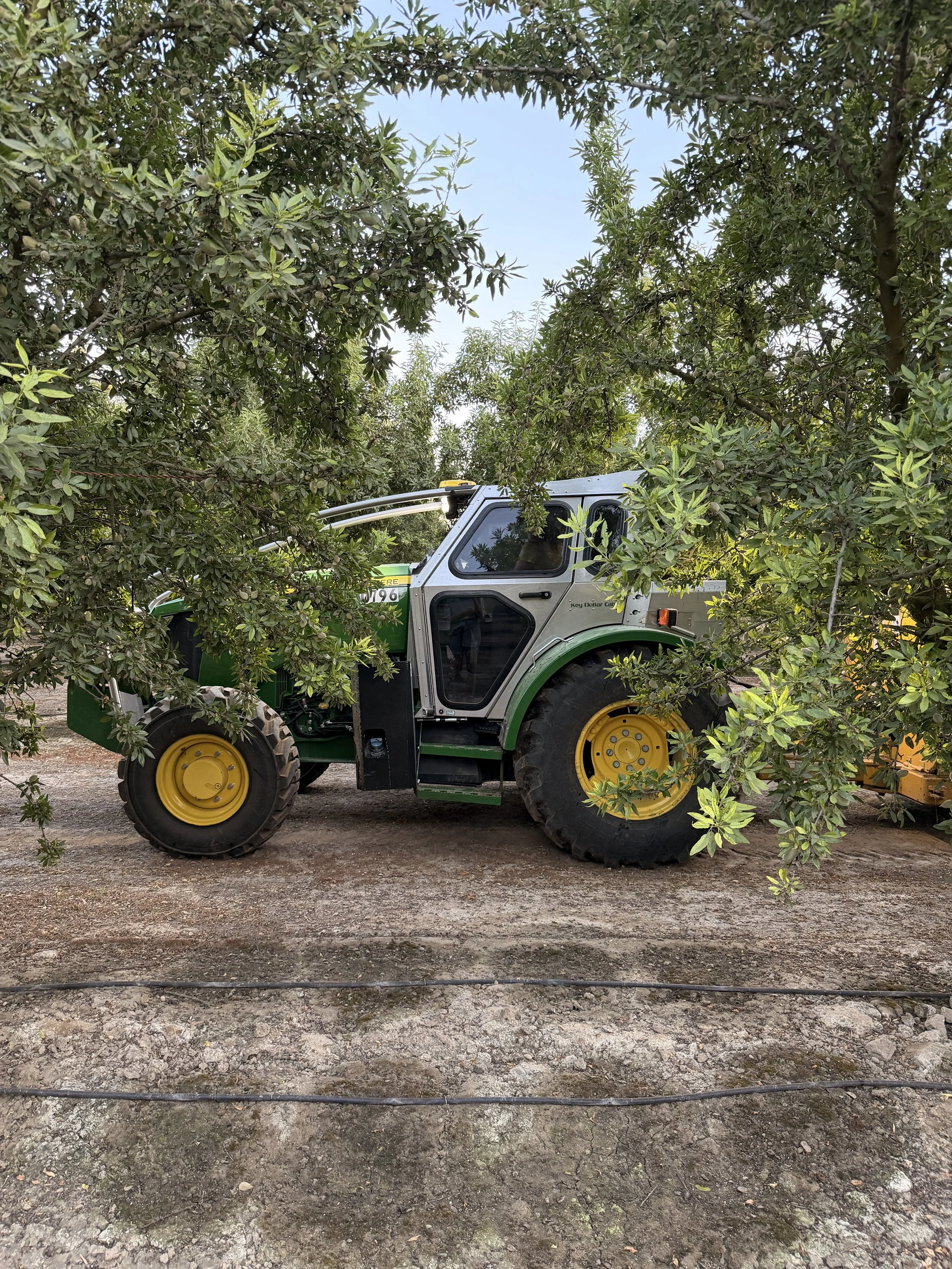
Back in the world of your grandpa’s agriculture, getting from point A to point B was still very much a large team sport.
Operators, foremen, and generally farmers alike were responsible for physically manning the equipment to get any work done on the farm before autonomous machines were allowed to come into play. Route selection, obstacle avoidance, and adapting to changing conditions all relied heavily on human decision-making.
The kind of path planning explored here gives machines the ability to make those navigational decisions on their own. While currently under operator supervision, this project seeks to radically reduce operator workload and help autonomy scale with confidence.
ProblemAutonomous machines simply cannot be trusted if their plans aren’t clearly visible. Path planning involves complex, ever-shifting variables that aren’t always intuitive to the person monitoring the machine(s).
When that "why" is hidden, trust breaks down.This project translates that ambiguity into a clear, visual plan, showing the user where the machine is going, how it’s getting there and what state it will be in all along the way.
This gives users the much needed confidence to trust autonomy rather than second guess it.
Go To Point
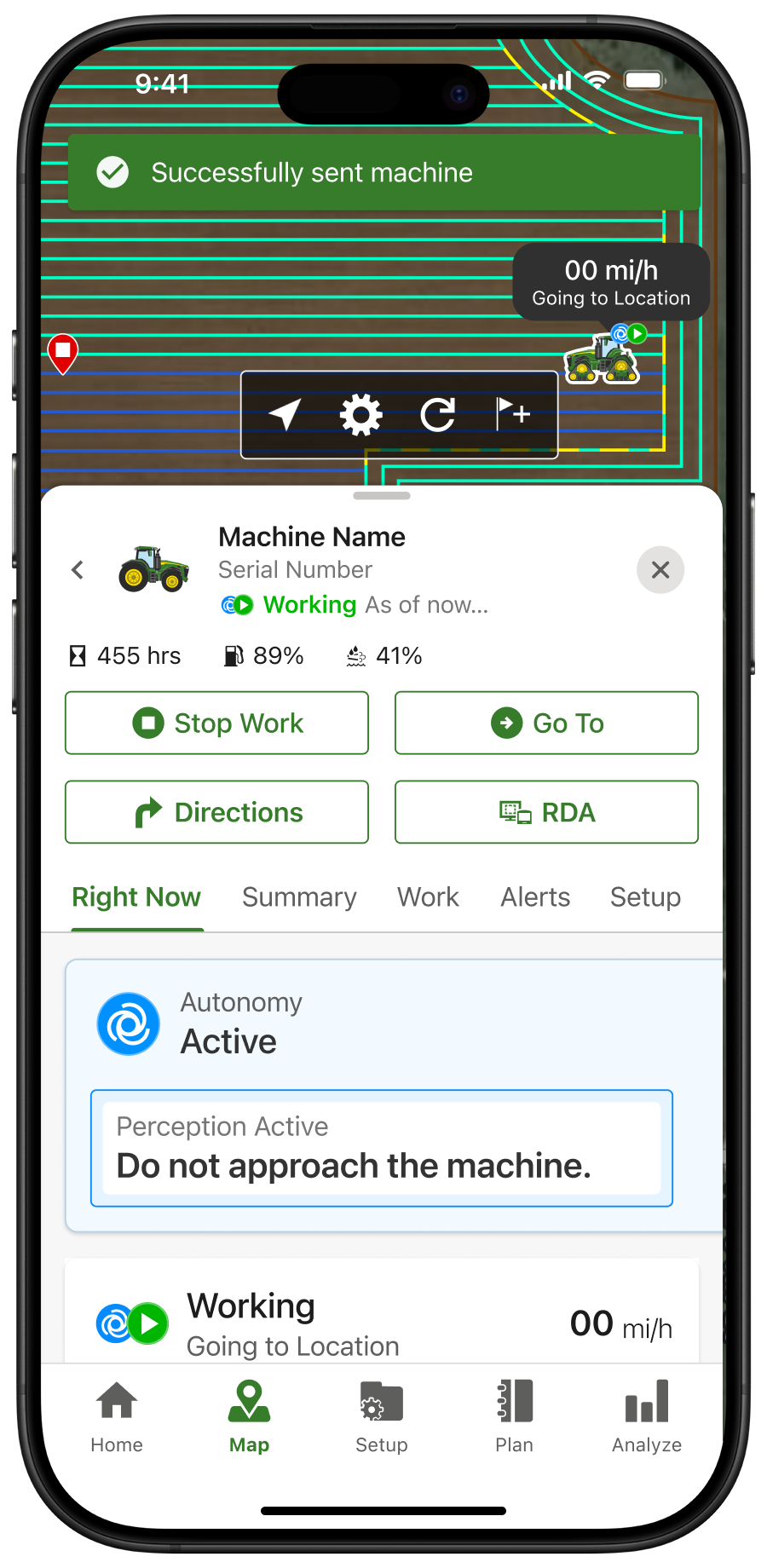
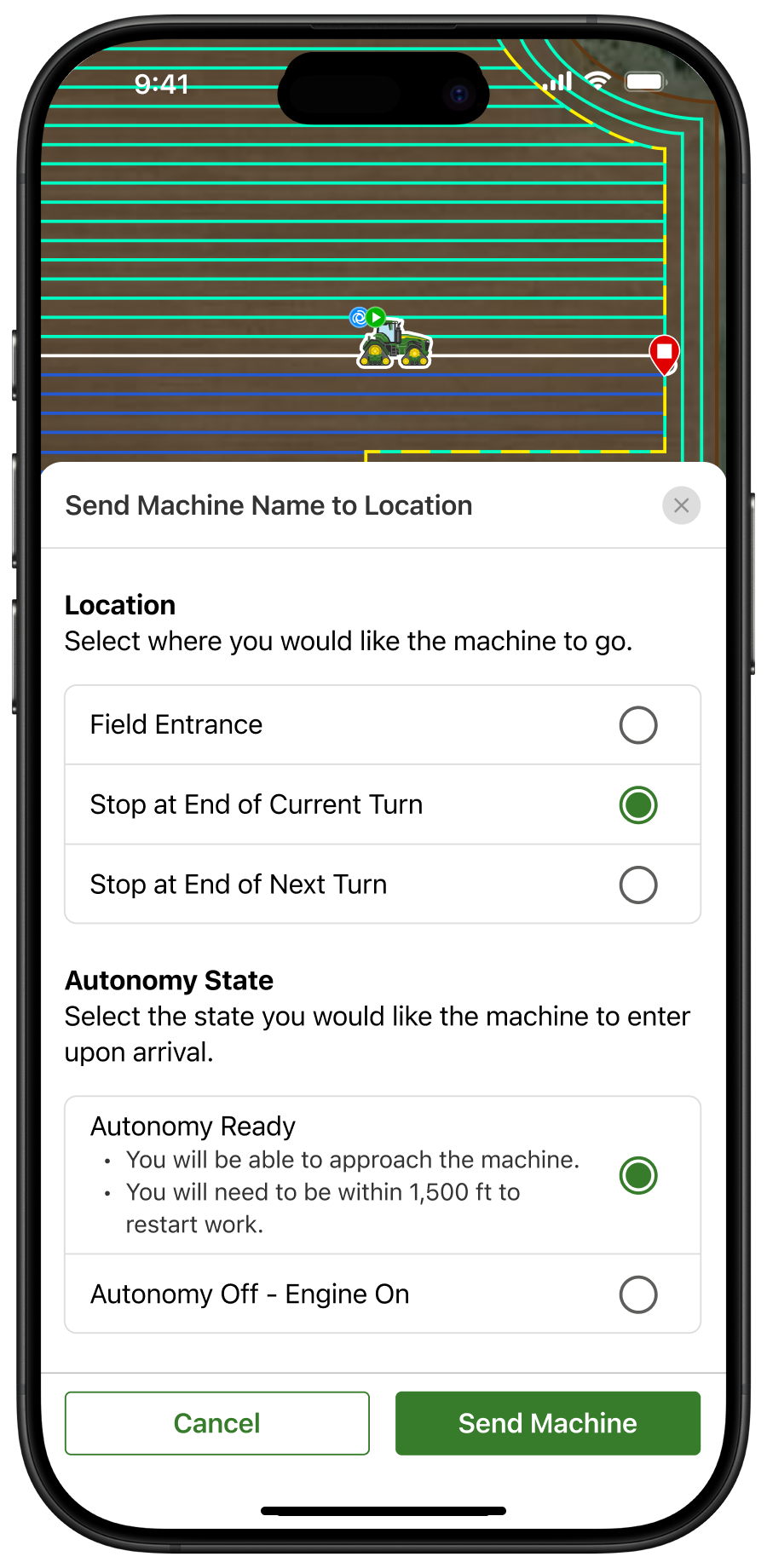
This specific project earned a design patent for the way it visualizes an autonomous machine’s planned path, the first of it’s kind to take a user’s selection and translate it into direction for an unmanned machine navigating into specific positioning.
Before this, there was no established pattern for showing a user where an unmanned tractor intends to stop for tendering, let alone letting them shape that plan directly. Helping to design the visualization meant creating this pattern within the context of our very well established design system while also working within the constraints of a mobile layout.
Translating a user’s input into something the machine could act on, and something the user could trust before it did, was key to the success of placing an autonomous machine in an already successful farm operation.
Client
Autonomous Tillage
Year
2024 - Current
Multi-Machine
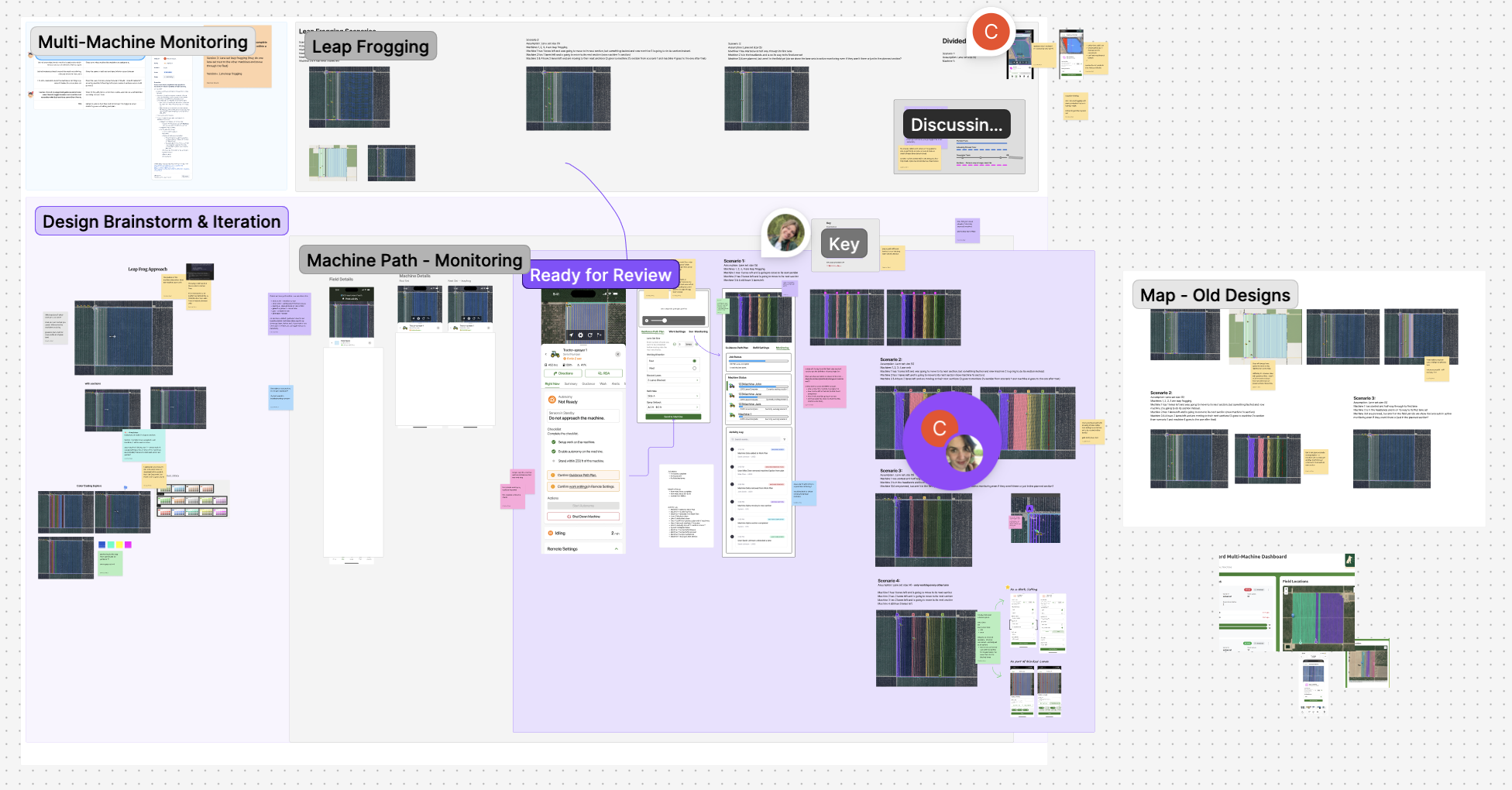
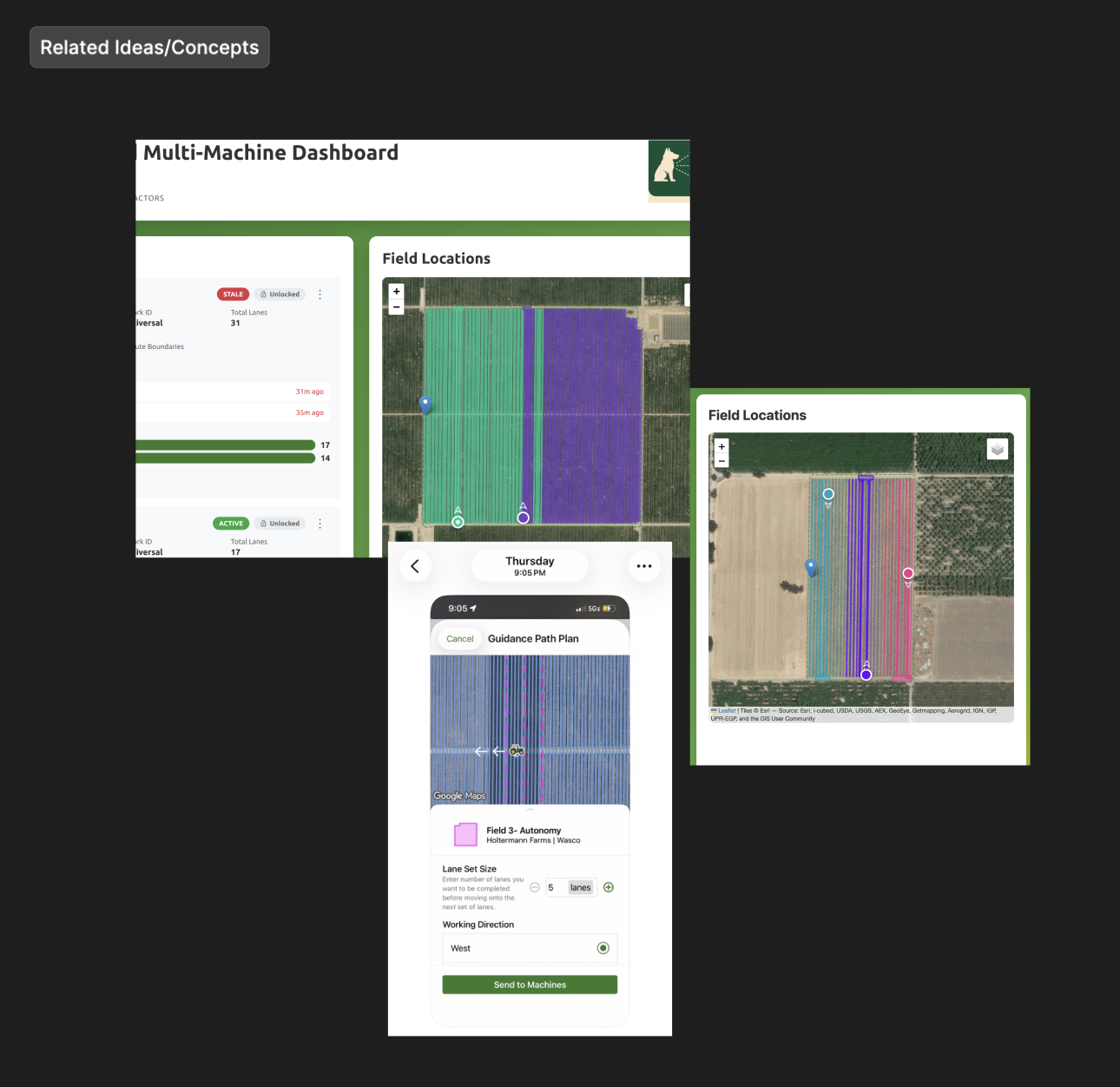
Feedback we consistently get when it comes to autonomous work is that it’s imperative that there is more than one machine working in potentially the same field, at the same time.
Knowing this is a complex enough issue to get one machine running autonomously. Adding in any additional machines truly highlights the need for extremely clear visualizations that paints a picture of multi-machine thinking, simultaneously. This board highlights the potentially ugly truth of pulling the curtain back to peak at an active iteration process before we get to that place of it working just right for our hard-working, orchard farmers.
This project is actively in research and development and is one we are eager to gain insight on as we venture deeper into this exciting unknown.
Client
Autonomous Blast Spray
Year
2024 - Current
reflectionDesigning for autonomy means designing for trust, and trust comes from clarity, not just some clever interactions. It has helped me to sit in the ambiguity long enough to find a kind of simple that actually holds up against the complexity underneath it. Doing that meant staying in constant alignment with engineering and cross-functional partners, not just handing off a finished idea.
This project has also helped me reshaped how I think of ownership. Elevating a collegue’s concept into something patent-worthy reminded me that great design work isn’t always about originating the idea, but about recognizing potential and pushing it as far as I can.